Business
Seattle's Economic Indicators and Investment Flows, Explained Clearly
From South Lake Union office absorption rates to Rainier Valley warehouse rents, here's what the numbers actually mean for Seattle's economy this July.
4 min read
Business
From South Lake Union office absorption rates to Rainier Valley warehouse rents, here's what the numbers actually mean for Seattle's economy this July.
4 min read
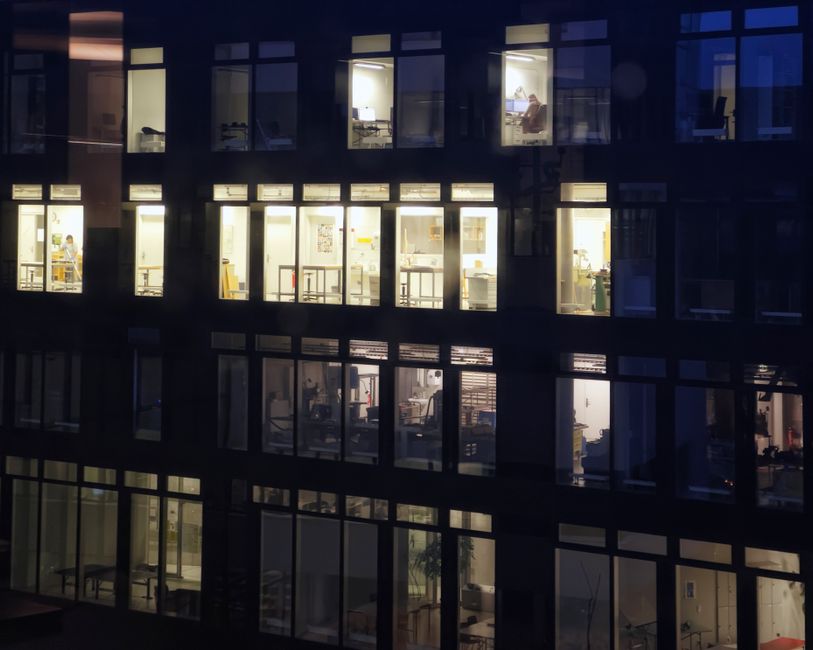
Commercial real estate absorption in Seattle's central business district turned positive for the first time in seven quarters during Q2 2026, according to figures released this week by Cushman & Wakefield's Seattle office. Net absorption hit roughly 180,000 square feet — a modest number, but the direction matters more than the volume right now.
The timing is significant. Global uncertainty is running high: gas shortages are hammering household budgets in Russia, European heatwaves killed thousands last month, and geopolitical turbulence from Tehran to Warsaw is rattling supply chains. Against that backdrop, Seattle's fundamentals are holding better than most coastal tech markets. The city's unemployment rate sits at 4.1 percent as of May 2026, below the national average of 4.6 percent, and King County added approximately 3,200 net payroll jobs in May alone, led by healthcare and advanced manufacturing.
South Lake Union remains the district drawing the clearest investment signal. Amazon's continuing buildout of its Denny Triangle campus has kept construction cranes overhead on Westlake Avenue North all year. But the more telling story is in the deals happening just south: two life-sciences firms — one a Boston-based genomics spinout and another backed by a Tokyo venture fund — signed 10-year leases at the Alexandria Real Estate campus near Mercer Street in May and June respectively. Combined, those leases total just over 95,000 square feet and represent the largest consecutive biotech commitments in the submarket since 2021.
Industrial and logistics space is a different story. In Rainier Valley and the SODO district, asking rents for Class B warehouse space have climbed to $22.50 per square foot annually — up 8 percent from July 2025. That compression is partly a function of limited new supply: the Port of Seattle's Terminal 5 modernisation project has absorbed several parcels that might otherwise have become speculative warehouse development. Smaller operators, particularly import-focused firms along 4th Avenue South, are feeling the squeeze and some have begun scouting space in Renton and Kent to offset costs.
Meanwhile, the residential market continues to recalibrate. The median sale price for a single-family home in Seattle proper reached $895,000 in June 2026, according to Northwest Multiple Listing Service data — down roughly 4 percent from the June 2025 peak of $932,000, but still well above the five-year average of $741,000. The inventory picture has loosened slightly: active listings in Seattle were up 22 percent year-over-year in June. That is giving some first-time buyers a foothold, particularly in Beacon Hill and Delridge, where price-per-square-foot remains below the citywide median.
For anyone running a business or weighing a career move, two programs are worth tracking closely. The Seattle Office of Economic Development's Small Business Stabilization Fund reopened its next application window on June 30, with grants of up to $10,000 available to businesses with fewer than five employees in designated equity zones including the Central District and Chinatown-International District. Separately, the Washington State Department of Commerce launched a workforce reskilling initiative called TechBridge WA in April, specifically targeting displaced retail workers; the program places participants in eight-week paid apprenticeships with companies in Bellevue and the Eastside corridor.
The broader read for July: Seattle is not booming, but it is not contracting either. The positive CBD absorption, the biotech leasing activity, and the resilient job numbers suggest the city has absorbed the post-pandemic tech correction and is rebuilding on a somewhat narrower but more diversified base. The risk factors are familiar — elevated interest rates are still cooling multifamily development financing, and any further disruption to Pacific Rim trade would hit Port of Seattle volumes hard. Businesses with lease renewals coming up in the next 12 months have unusual negotiating leverage right now. Use it.
About this article
Published by The Daily Seattle
Spread the word
Daily brief
Free, in your inbox before 7am. Weekdays.
The Daily Network — local news across Australia