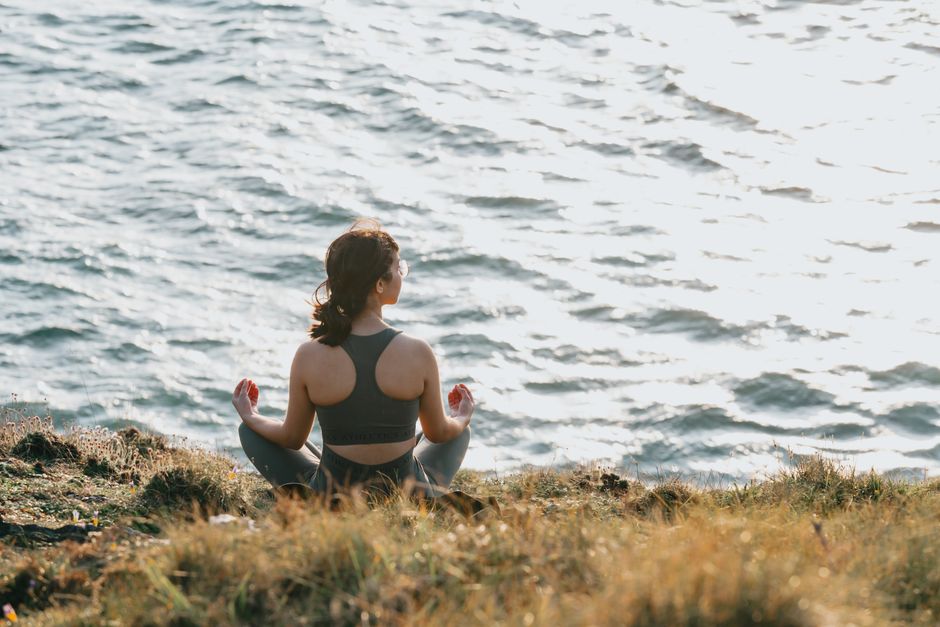
On any given Thursday morning at Warren G. Magnuson Park, the scene looks less like a dog park and more like a group fitness class that got out of hand. Joggers loop the 1.4-mile perimeter trail, a half-dozen people do step-ups on the concrete picnic benches near the off-leash area's north entrance, and somewhere near the waterfront a pair of women trade push-up sets while their labs splash in Lake Washington. Nobody planned this. It just happened, the way things do when you give 350 acres of green space to a city of dog owners with restless energy and a social appetite.
Seattle's relationship with outdoor fitness has always been intense — the city has roughly 6,400 acres of parkland managed by Seattle Parks and Recreation, and the department's 2025 Community Survey found that 71 percent of respondents cited parks as their primary setting for regular physical activity. But a quieter shift is happening inside that number. Dog owners, who make up an estimated 45 percent of Seattle households according to a 2024 King County pet licensing report, are increasingly using off-leash areas not just as a convenience stop but as a daily fitness anchor with a built-in social network attached.
The Parks Where It's Actually Happening
Magnuson's off-leash area — 9 acres, fully fenced, with direct water access — is the largest in Seattle proper, and it functions like a neighborhood gym that charges nothing and never closes. The regulars know each other's dogs by name before they know each other's surnames. That frictionless social entry point, mediated entirely by the animal, appears to lower the barrier to showing up consistently.
Down in the Eastlake neighborhood, Rogers Playground off Harvard Avenue East draws a smaller crowd but a notably committed one. A loose collective of dog owners there started meeting at 7 a.m. on Saturdays last spring, doing bodyweight circuits in the grassy buffer zone before the off-leash hour fills up. No app, no trainer, no fee. It grew from three people to roughly fifteen regulars by June 2026.
For residents on the Eastside, Marymoor Park in Redmond — a King County facility with a 40-acre off-leash zone, the largest in the region — has developed a similar ecosystem. The paved perimeter path is popular enough on weekend mornings that some users treat it like a track workout, marking intervals between the parking lot and the far meadow fence line. King County Parks recorded more than 1.1 million visits to Marymoor in 2025, a figure the department attributes partly to post-pandemic sustained interest in outdoor socialising.
Why This Matters Beyond the Feel-Good Story
The fitness benefits of dog ownership are well documented — a 2019 University of Liverpool study tracking 86 families found dog owners walked nearly 22 minutes more per day than non-owners — but the social dimension is drawing fresh attention from public health researchers. Loneliness remains a significant health concern in urban populations, and Seattle is not immune. A 2024 survey by the Seattle Foundation found that 38 percent of adults in King County reported feeling socially isolated at least several times a week.
Parks that function simultaneously as exercise spaces and community gathering points address both problems at once. The dog is essentially infrastructure. It gives people a reason to show up at the same time, in the same place, on a recurring schedule — the exact conditions that research on social bonding suggests are necessary for genuine connection to form.
Seattle Parks and Recreation's Green Seattle Partnership has flagged off-leash areas for infrastructure investment in its 2026-2028 capital plan, with $2.3 million earmarked for improvements including drainage, fencing, and water access at six locations citywide. Magnuson and the Jefferson Park off-leash area in Beacon Hill are both listed as priority sites.
For anyone looking to tap into this scene, the practical entry points are straightforward. The city's off-leash areas require a current King County dog license, which runs $30 annually for spayed or neutered dogs. Show up on a weekday morning between 7 and 9 a.m. at Magnuson's north entrance, or Saturday mornings at Rogers Playground, and the community tends to take care of the rest. Bring water for the dog. The humans are usually fine.